Sunken driveways, patios, and sidewalks raised back to grade without tearing them out. Trip hazards ground down, cracks sealed, failed sections cut out and replaced across Boerne and Kendall County.
A slab that has dropped is not automatically a slab that needs replacing. In Boerne the concrete itself is usually fine and what failed is underneath it, which is a much cheaper problem to solve.
Raising a sunken slab back to grade by filling the void beneath it through small injection ports, then patching the holes. Driveways, patios, walkways, porch slabs, and pool decks.
Where one panel has risen or dropped against its neighbour, grinding the lip removes the hazard the same day. For bigger drops, lifting the low side is the better fix.
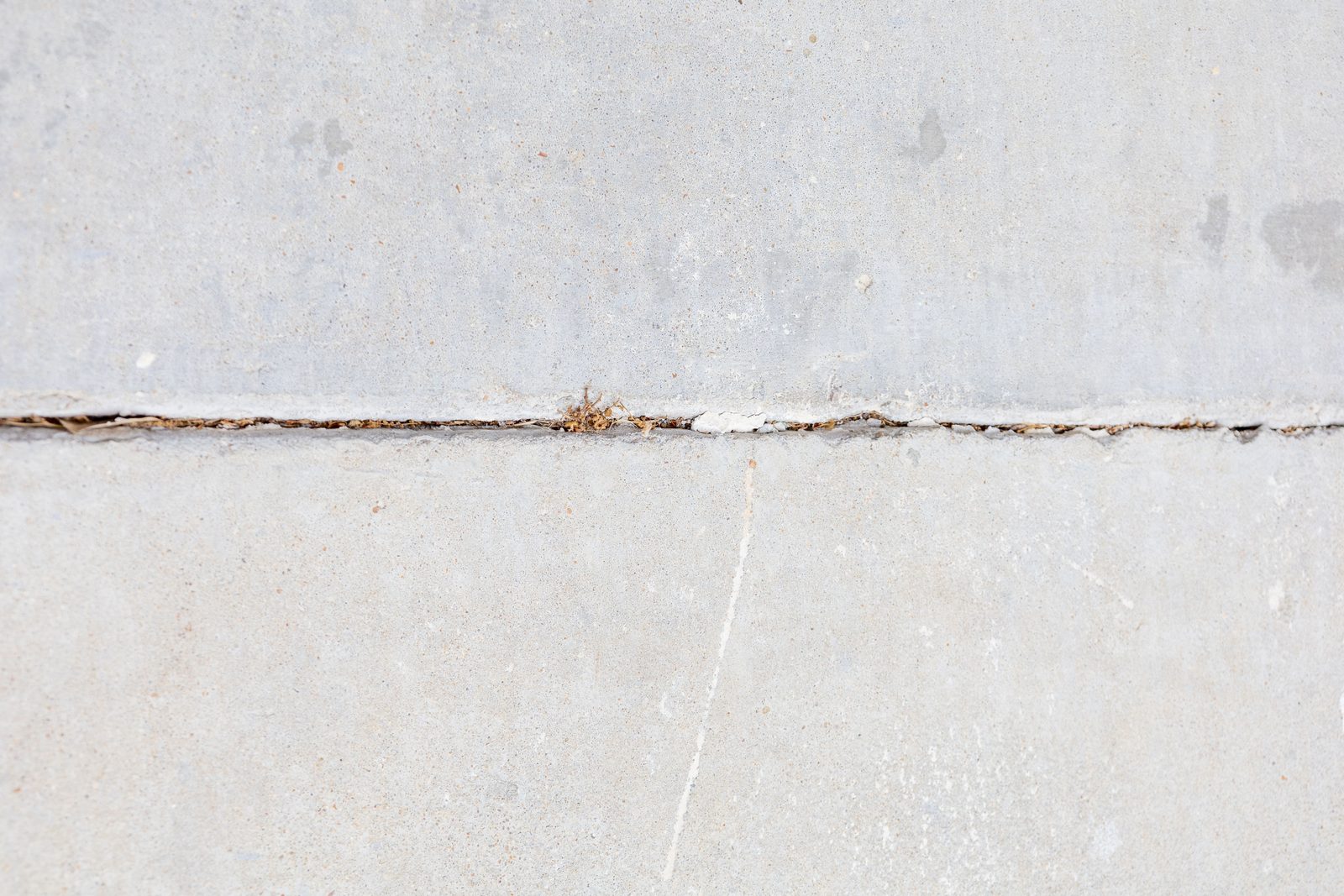
Not every crack is worth money. The ones that are getting wider, offsetting at the edges, or letting water underneath are worth dealing with before they spread.
When a slab has broken up past the point of lifting, the failed sections come out, the base gets rebuilt, and the new pour is matched to the old in width, thickness, and finish.
Four causes, and all of them are about what is under the concrete rather than the concrete itself. Lifting a slab without fixing the cause buys you a few years at best.
Caliche makes an excellent base when it goes down in lifts of six inches or less at the right moisture. Dumped in one go and driven over, it keeps settling for years under load. This is the single most common reason a Boerne driveway drops at the apron.
Hill Country lots shed water fast. Where that runoff crosses a slab edge, it carries the fine material out from underneath a little at a time until there is a void. The slab stays flat until the void gets big enough, then it drops all at once.
Live oak roots lift a slab while they grow and leave a cavity when they are cut or die back. Lifted first, sunken later, same tree.
A four-inch driveway poured for cars will crack and settle under a delivery truck or a loaded trailer. If that is what caused it, replacing the section at a greater thickness is the honest fix rather than lifting it back up to wait for the next truck.
The question is always whether the concrete is sound. If it has dropped but held together, lifting is faster, cheaper, and leaves no scar where new concrete meets old. If it has broken up, lifting a broken slab just gives you a broken slab at the right height.
We will tell you which one you are looking at, including when the answer is that it is cosmetic and not worth spending money on yet.
| What you have | Usual answer |
|---|---|
| Slab dropped but intact | Lift it |
| One panel high against its neighbour | Grind the lip |
| Hairline cracks, slab still flat | Leave it |
| Crack opening and offsetting | Route and fill, or replace the panel |
| Broken into several pieces | Replace the section |
| Surface flaking and pitted | Replace, or resurface if the slab is sound |
It is priced by the slab, not by the square foot, because the cost is driven by how much void is under there and how many injection points it takes. Lifting is almost always cheaper than replacement, often by half or better, which is why we look at it first. We will not quote it without seeing the slab.
If the concrete itself is sound and the problem is that it has dropped, it can usually be lifted. If it has broken into several pieces, lost its surface, or cracked clean through in more than one place, lifting a broken slab just gives you a broken slab at the right height. We will tell you honestly which one you have.
Almost always a base problem rather than a concrete problem. Caliche that was dumped rather than compacted in lifts will settle under load, and Hill Country runoff washes fines out from under a slab edge over a few seasons. Both leave a void, and the slab follows it down.
Most residential slabs are a few hours, and you can usually walk on it the same day and drive on it within a day. It is the fastest fix in concrete, which is part of why it is worth checking before you price a tear-out.
Both. Hairline cracks in a flat slab are normal and often not worth spending money on, and we will say so. Cracks that are opening, offsetting at the edges, or letting water under the slab are worth sealing or routing and filling before they turn into a replacement.
Boerne and the surrounding communities, including the acreage lots where a sunken approach drive is a long way from the road.
Tell us what has dropped and roughly how far. Or call (830) 357-7152.
We answer estimate requests the same day during the week. Nothing gets shared with anyone else.
